
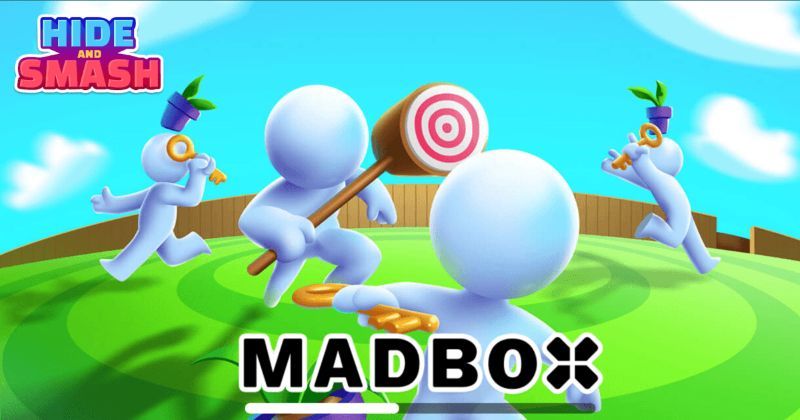
Hide and Smash is easiest to win as a hider when you treat hiding like a system: blend as a believable prop, control what smashers can confirm, and collect keys with minimal exposure until the round ends. Based on repeatable prop-hunt patterns and hands-on play testing in Hide and Smash, most “instant losses” come from the same mistakes: suspicious movement, bad prop placement, and greedy key routes.
Next, you will get 5 powerful tactics that lock in insane hiding wins, with clear rules for movement, misdirection, and endgame survival.
Hide and Smash is not purely survival. Your team’s goal as hiders is to collect keys while staying undiscovered, while smashers try to find and smash hiders before the keys are collected.
That changes how you should play:
A hider who never moves often loses because the team never finishes keys. A hider who moves recklessly loses because they get identified. The best hiders do controlled movement: short, planned rotations that look natural for the prop they mimic.
The fastest way to lose is to give smashers certainty. Your job is to keep them guessing.
Most smashers do not instantly know. They confirm you through signals:
Use a simple rule set:
High-percentage behaviors:
Common mistake: treating every second as escape time. Every second moving is a second broadcasting that you are a player.
Disguise only works if you respect believability. A “perfect prop” that twitches dies faster than a slightly weird prop that stays still.
When you disguise, run this quick scan:
If you can only satisfy one, choose Be still.
Smashers often sweep by smashing dense clusters. If you hide deep inside a cluster, you might die to random smashing. If you hide alone, you might die to visual identification.
The sweet spot:
Keys are the win condition. If you do not route them intelligently, you force your team into panic plays.
Your objective is not “grab the nearest key.” It is:
Common mistake: sprinting for keys early, getting spotted, then spending the whole round running instead of progressing the objective.
The best hiders win by making smashers waste time smashing the wrong rooms.
Smashers have limited attention. If you make them:
you buy your team key progress.
If you play with teammates, bait becomes stronger:
Common mistake: over-baiting. If you bait repeatedly, smashers stop searching and start hunting you specifically. One good bait per round is often enough.
Most rounds are decided late, when keys are nearly complete and smashers become desperate.
Practical rule:
Common mistake: chasing the final key across open space. If you are not the safest collector, do not volunteer to be the sacrifice.
If you keep losing, it is usually one of these:
Run 3 rewards players who control tempo, avoid panic moves, and take safe routes instead of sprinting into danger. That same mindset wins rounds in Hide and Smash: move only when line-of-sight is broken, choose low-risk key paths, and treat late-game survival as the priority when keys are almost complete.
Hide and Smash is a prop-hunt hide-and-seek game where hiders blend as objects and collect keys while smashers hunt and smash them.
Hiders win by collecting all keys before smashers find and break the hiders.
Choose a believable prop, match the room theme, freeze after disguising, and move only when smashers commit to another area.
Usually no. Clusters get randomly smashed. Hide near clusters to blend visually but avoid random smash sweeps.
Move only after breaking line-of-sight, relocate in one clean segment, disguise, then freeze for several seconds.
Because of suspicious behavior: micro-movements, wrong placement, or moving while visible. Stillness and believability matter most.
Keys are the win condition. The right strategy is safe key routing while maintaining stealth.
Identify your most common death trigger and fix it: visible movement, wrong room, cluster smashing, or endgame panic.
Reduce movement, choose low-chaos zones, and prioritize survival if your team is close to finishing.
Yes. It teaches you what looks suspicious, which areas get smashed first, and how hunters sweep rooms.
If you want insane hiding wins in Hide and Smash, stop treating hiding like a single spot and start treating it like a system: control information, disguise believably, route keys safely, misdirect intelligently, and play endgame discipline. Do that consistently, and your rounds will feel less like luck and more like repeatable wins in Hide and Smash.