
Hide and Smash is easiest to win against any hunter when you follow four repeatable moves: deny information, disguise believably, route keys with minimal exposure, and play the endgame with disciplined misdirection. Based on practical prop-hunt patterns and hands-on match behavior in Hide and Smash, most “unlucky” losses are actually predictable: visible movement, wrong-room props, and greedy rotations at the worst time.
Next, you will get 4 game-changing moves step by step, with clear rules you can apply immediately to outsmart hunters and win more rounds.
Most hiders lose for one of three reasons:
Once you accept that, your strategy becomes less emotional and far more consistent.
Your first job is to keep smashers unsure. Smashers win faster when they can confirm targets quickly, so your goal is to deny confirmation.
A simple rule that upgrades your survival rate immediately:
Why this works:
Your movement is safest when the hunter’s camera cannot track the whole path.
High-percentage movement windows:
Low-percentage movement windows:
When you do move, move like an object would plausibly end up:
This move alone makes you harder to read, which is how you survive long enough to win the key objective.
Hiding is not about invisibility. It is about believability.
Use this triad every time you choose a prop position:
If you can only satisfy one, prioritize Still. A slightly weird object that never moves often survives longer than a perfect prop that twitches.
Smashers often smash dense prop clusters quickly because it is time-efficient.
So you want a position that is:
A practical positioning model:
In most maps, smashers patrol what is fast:
You want the opposite:
This is not glamorous hiding. It is high-percentage hiding.
Hide and Smash is not a pure survival contest. The hider team wins by getting the keys collected before smashers eliminate you. That means you must learn to move with purpose.
Instead of chasing the nearest key, run a simple plan.
Phase: Stabilize
Phase: Harvest low-risk keys
Phase: Rotate only after smasher commitment
This is how you win faster without becoming the hider who dies first.
A useful concept for prop-hunt games:
So you should spend exposure only when it buys objective progress.
High value exposure:
Low value exposure:
If you are playing with multiple hiders, the fastest wins come from role separation:
Even without voice chat, you can do this by watching how aggressive teammates are and adjusting your own risk level accordingly.
When smashers cannot confirm targets, they switch to pattern hunting:
You beat that by planting false patterns and then playing the endgame calmly.
Bait is powerful, but only once.
A high-percentage bait sequence:
This causes a common hunter reaction:
Do not bait twice in the same area. The second time they stop guessing and start hunting you specifically.
Late round behavior changes:
So the endgame rule set becomes:
Your job late round is not to be clever. It is to be alive.
To outsmart hunters consistently, understand their mental checklist.
Smashers usually test:
Your counterplay is therefore simple:
Most versions keep it simple:
If you are hiding, your performance comes more from camera discipline than button complexity:
PolyTrack rewards players who run clean lines and repeat the same controlled inputs instead of improvising every corner. That same discipline is how you outsmart hunters in Hide and Smash: choose believable positions, rotate only on safe windows, and execute one clean move at a time so you stay unpredictable without looking suspicious.
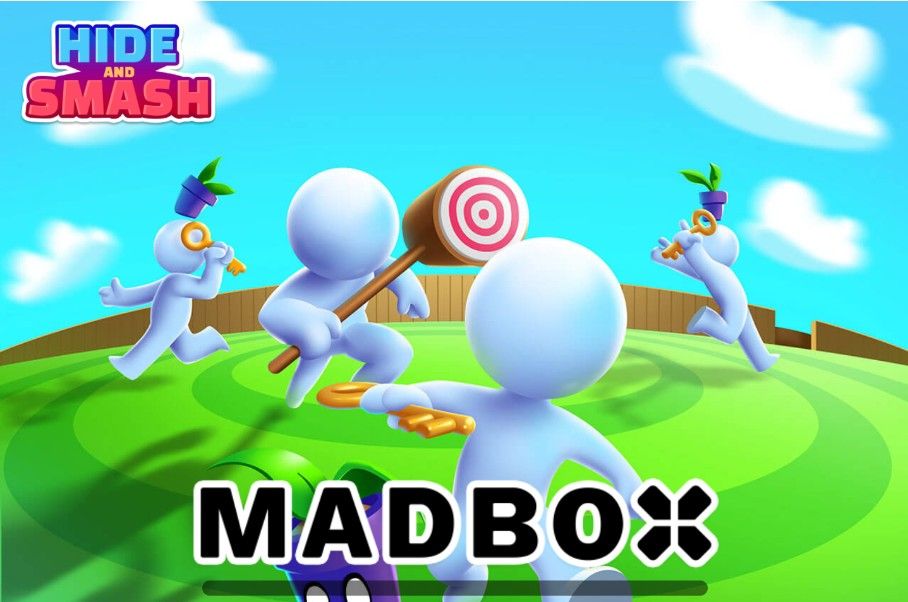
Hide and Smash is a prop-hunt hide-and-seek game where players are assigned to a Hide team or Smash team, with hiders disguising as objects and collecting keys while smashers hunt and smash them.
Hiders win by getting all keys collected before smashers find and smash the hiders.
Control information: freeze in line-of-sight, move only after breaking line-of-sight, and reposition once per rotation instead of micro-moving.
Do not hunt for a single best spot. Use believability: match room theme, blend near similar props, and stay still.
Usually no. Clusters get smashed randomly. Hide near the edge of a cluster so you blend without being collateral.
Move only when the hunter is committed elsewhere, and only after you break line-of-sight. One clean move is better than many small moves.
Keys are the win condition. The correct approach is safe key routing: take low-risk keys while preserving stealth.
Avoid standing out: do not be alone, do not be wrong-room, and do not sit crooked. Most tests are triggered by props that look unusual.
Reduce movement, choose low-chaos areas, and prioritize survival. Endgame discipline wins more rounds than fancy hiding.
Common versions list movement as WASD or arrow keys, and smashing as aiming and using left click.
If you want to outsmart any hunter in Hide and Smash, stop relying on lucky spots and start using a system: control information, hide believably, route keys safely, and win the endgame with disciplined stillness and selective misdirection. When you apply these four game-changing moves consistently, Hide and Smash becomes less random and far more winnable, even against aggressive smashers.